Homeowners insurance is usually organized into several coverage parts rather than one blanket promise. The common parts are dwelling, other structures, personal property, loss of use, personal liability, and medical payments to others. Each part covers a different kind of loss. This guide explains what each one does, what it typically excludes, and how the parts fit together.
Why Coverage Comes in Parts
Insurance policies divide protection into parts so that each type of loss is defined, measured, and paid for under its own rules. This matters more than it sounds. A burst pipe that damages your walls is a different kind of loss from a lawsuit filed by an injured visitor, and the policy handles them through different doors. When you read your policy, you will find each coverage part described separately, with its own limits and its own exclusions. If you understand the parts first, the whole document becomes much easier to read. For a broader overview of how homeowners insurance works as a whole, see our guide to homeowners insurance basics.
Dwelling Coverage
Dwelling coverage addresses the structure of the home itself: the walls, roof, foundation, built-in appliances, and attached structures such as a garage that shares a roofline with the house. If a covered event damages the physical structure, this part of the policy is the one that responds. The key word is "covered." Policies list the perils they protect against, and everything else falls outside the contract unless added back through an endorsement. A helpful habit is to read the dwelling section alongside the exclusions section, because the two work as a pair — one says what is covered, the other says what is not. Dwelling coverage generally applies up to a stated limit, and that limit is meant to reflect the cost of rebuilding the structure, not the price the home might sell for. These are different numbers, and confusing them is one of the most common misunderstandings in homeowners insurance.
Other Structures Coverage
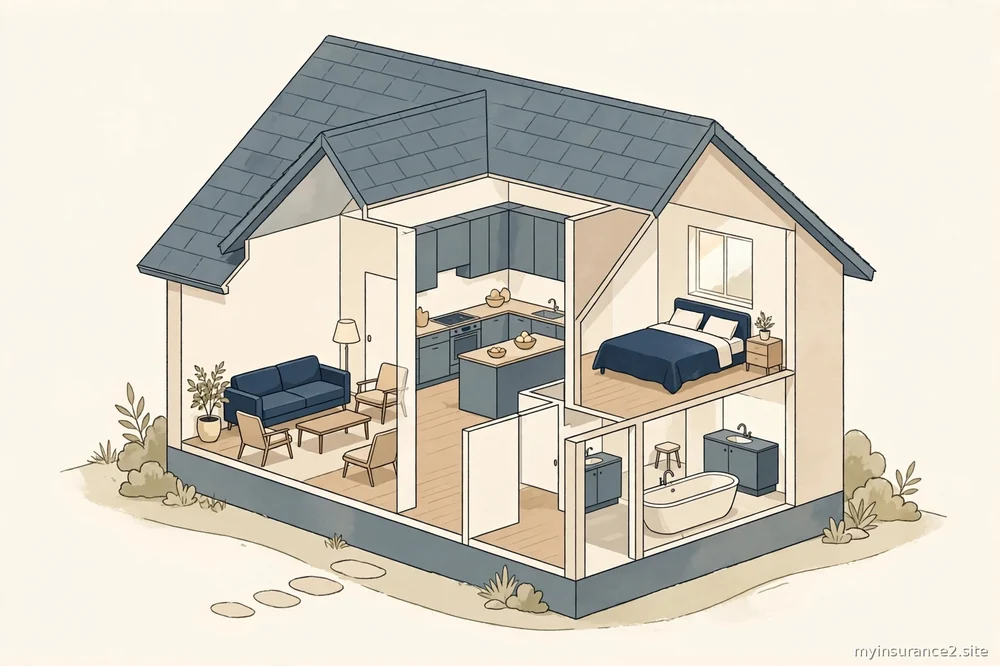
Other structures coverage addresses buildings on the property that are not attached to the main dwelling: a detached garage, a shed, a fence, a standalone workshop, or a gazebo. The logic is the same as dwelling coverage — damage from a covered peril — but the structures are separated out so each category gets its own limit. This separation is worth understanding because the limit for other structures is often set relative to the dwelling limit, and a property with several expensive detached buildings can find the standard allocation too small. If you have added structures over the years — a workshop, a pool house, upgraded fencing — those additions may not be reflected in the limit you originally chose. Reviewing this part after any significant property change is a sensible practice.
Personal Property Coverage
Personal property coverage addresses your belongings: furniture, clothing, electronics, kitchen equipment, and the contents of the home generally. This part responds when belongings are damaged, destroyed, or stolen as a result of a covered event. Two concepts shape how this coverage behaves in practice. The first is the coverage limit, which caps the total payable for belongings. The second is the valuation method the policy uses to calculate what your belongings were worth — policies typically use either replacement cost or actual cash value, and the difference between the two can be significant for older items. Renters will find that this part is the heart of their policy, since they have no dwelling to insure; our guide to renters insurance covers that situation in detail.
Loss of Use Coverage

Loss of use coverage addresses the extra costs of living elsewhere when a covered event makes the home temporarily uninhabitable. If a fire damages the kitchen and you need to stay somewhere else during repairs, the added cost of temporary housing and the increase in everyday living expenses can be covered under this part, subject to its limit. The operative idea is additional cost: it is meant to bridge the gap between your normal living expenses and the higher costs of a temporary arrangement, not to fund an upgrade in lifestyle. Policies set limits for this coverage in one of two ways — a stated amount or a period of time, or sometimes both — so it is worth checking which form your policy uses and whether it seems adequate for the repair timelines common in your area.
Personal Liability Coverage
Personal liability coverage addresses claims made against you when someone is injured on your property or when you accidentally cause damage to someone else's property. It also generally covers the cost of legal defense for a covered claim, which matters because defense costs can be substantial even when a claim turns out to be unfounded. This is the part of the policy that responds to lawsuits, and it is frequently the least understood because it has nothing to do with the house itself. Liability coverage applies up to a stated limit, and it is subject to exclusions — for example, injuries arising from business activities conducted at home or from intentional acts are commonly excluded. Because liability limits protect everything you own against a large judgment, this is one of the sections that deserves careful attention rather than a quick skim.
Medical Payments to Others
Medical payments coverage addresses smaller medical expenses when a guest is injured on your property, regardless of who was at fault. It is designed for quick, modest payments — a clinic visit for a cut, a broken wrist from a fall on the steps — without the question of legal liability being argued first. The limits on this coverage are typically much lower than liability limits, reflecting its purpose as a goodwill, fast-response mechanism rather than a substitute for liability protection. It is a small part of the policy, but it is the one most likely to be used for everyday accidents.
Common Exclusions Worth Knowing
Every coverage part sits inside a fence of exclusions, and the exclusions are remarkably consistent across standard policies. Damage from flooding is the classic example: standard homeowners policies generally do not cover flood damage, which is why separate flood insurance exists. Earth movement, including earthquakes, is commonly excluded as well. Gradual damage — slow leaks, wear and tear, neglect, pest damage — is typically excluded because insurance is designed for sudden, accidental events rather than maintenance problems. Intentional acts by the policyholder are excluded everywhere. The exclusions section is not fine print to be feared; it is the part of the policy that tells you where you need separate coverage or a different plan, and reading it once a year is one of the highest-value things a homeowner can do.
How the Parts Work Together
A single event can trigger several coverage parts at once, and the parts are designed to coordinate. A kitchen fire might involve dwelling coverage for the damaged walls and cabinets, personal property coverage for the ruined appliances and contents, loss of use coverage for the weeks spent in temporary housing, and medical payments coverage if a guest was treated for smoke inhalation. Each part applies its own limit and its own deductible rules to its share of the loss. Understanding this coordination helps in two practical ways: it clarifies why insurers ask detailed questions about each category of loss after an event, and it shows why raising one limit while ignoring another can leave a gap. If a loss ever occurs, the basics of filing a home insurance claim explain how the process unfolds from notification through settlement.
Key Takeaways
- Homeowners insurance is a bundle of coverage parts — dwelling, other structures, personal property, loss of use, liability, and medical payments — each with its own limits and rules.
- Dwelling coverage relates to rebuilding cost, not market price; confusing the two is a common mistake.
- Personal property coverage depends heavily on the policy's valuation method, so know which one applies to your belongings.
- Liability coverage protects your assets against lawsuits and includes legal defense; it deserves more attention than it usually gets.
- Standard exclusions — flood, earth movement, gradual damage, intentional acts — define where this policy ends and other planning begins.
- When you are unsure whether a specific situation is covered, the policy documents and a licensed professional are the only reliable sources.
What is the difference between dwelling coverage and other structures coverage?
Dwelling coverage applies to the main house and attached structures, while other structures coverage applies to detached buildings on the same property, such as a separate garage, shed, fence, or gazebo. Both respond to damage from covered perils, but they carry separate limits. The other-structures limit is often set as a proportion of the dwelling limit, which means properties with several costly detached buildings may need the allocation reviewed. If you have added or upgraded detached structures since the policy was written, check whether the current limit still reflects what is on the property.
Does personal property coverage protect my belongings everywhere?
Generally, personal property coverage follows your belongings beyond the home to a degree — items stolen from a car or damaged while traveling may be covered — but usually at a reduced limit compared with losses inside the home. High-value categories such as jewelry, fine art, collectibles, and certain electronics often have special sub-limits that are much lower than the overall personal property limit. If you own items in these categories, ask a licensed professional whether a scheduled endorsement or separate coverage is appropriate. Keep an inventory of belongings with photos or video to simplify any future claim.
What does loss of use coverage actually pay for?
Loss of use coverage pays for the additional living expenses you incur when a covered event makes your home temporarily uninhabitable — temporary housing, extra food costs, laundry, and similar added expenses above your normal spending. It does not pay your regular mortgage or normal household costs, which continue regardless. The coverage is subject to a limit, set either as an amount or a time period, and payments stop when the home becomes livable again or the limit is reached. Reviewing the limit is worthwhile in areas where repair timelines tend to run long.
How is personal liability coverage different from medical payments coverage?
Personal liability coverage responds to claims and lawsuits alleging you are legally responsible for someone's injury or property damage, including the cost of defending you in a covered suit. Medical payments coverage pays smaller medical bills for guests injured on your property without any question of fault or legal responsibility. Think of medical payments as a fast, modest, no-fault response to everyday accidents, and liability as the larger protection against serious claims. The two complement each other but serve different purposes and carry very different limits.
Are floods and earthquakes covered by a standard homeowners policy?
Standard homeowners policies generally exclude both flood and earth movement, including earthquakes — among the most consistent exclusions in the industry. If you live in an area exposed to either risk, separate flood insurance or earthquake coverage may be available through specialized programs or endorsements, depending on your location. A licensed professional in your area can explain the options and how they interact with your main policy. Reviewing your own policy's exclusions section is the definitive way to confirm what is covered for your home.
This site is educational information only — not financial or legal advice. Consult a licensed professional about your own situation.